The Manufacturing Floor
Your customer’s space sets the requirements. Your cabinet components should support the design—not force you to work around stock sizes or take on every manufacturing step in-house.
CabParts helps professional cabinetmakers and builders turn project requirements into made-to-order casework and components. Behind that work is a manufacturing floor equipped for panel cutting, CNC processing and edgebanding, supported by people who understand how the parts need to come together.
You stay focused on the design, craftsmanship and installation your customer is counting on. We help with the components behind it.
True custom starts before assembly
A cabinet that fits the room starts with more than a finished width. Panel dimensions, construction details, hardware preparation and exposed edges all need to work together.
Tell us what the job calls for. We’ll help you confirm the materials, dimensions and configuration before manufacturing. That gives you a practical way to order the components your design needs, with special requirements reviewed rather than assumed.
What the equipment means for your shop
Automated panel storage: organize material before the first cut
Custom manufacturing starts with the sheet material. CabParts’ CSF Barbaric automated storage system stores and retrieves panels, using an overhead handling unit to move material within the storage area. It takes repetitive sheet-handling work out of the manual process before cutting and machining.
For your project, the value is an organized supply of material behind the custom parts you order. Automated handling helps make stored panels accessible for production while limiting unnecessary manual movement of large sheets.
You can focus on selecting the material and configuration your customer needs, with CabParts providing the storage and handling infrastructure behind the manufacturing work. Material availability and special requirements are still confirmed for each job.
Panel cutting: start with parts sized for the job
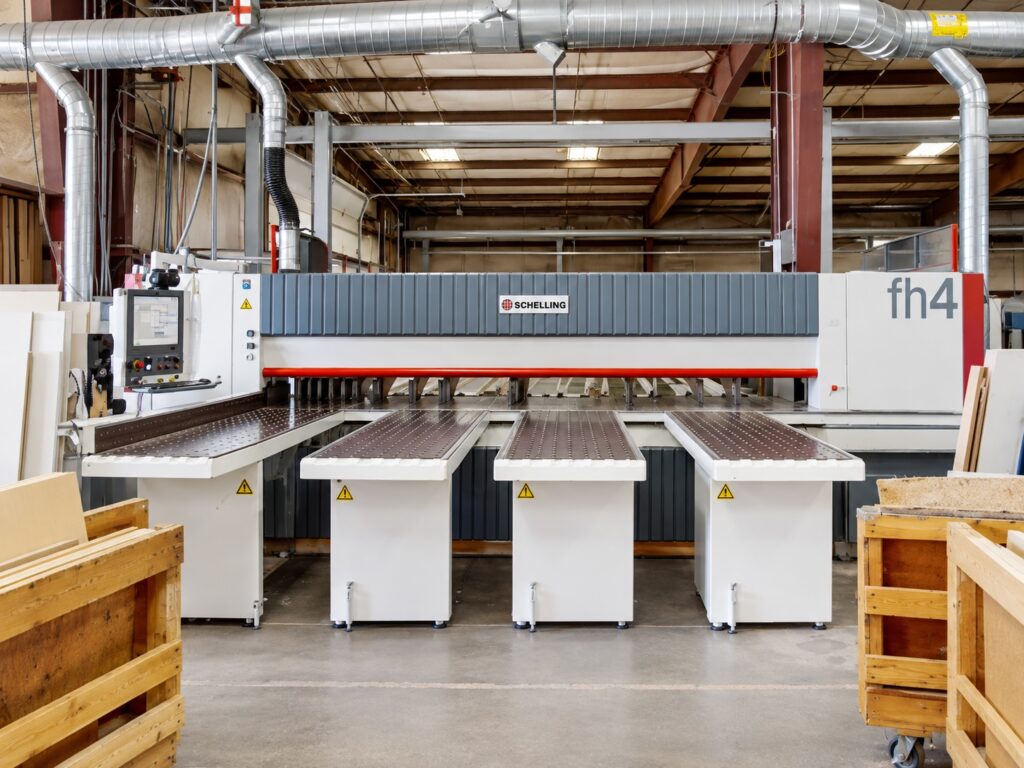
The Schelling fh4 panel saw cuts sheet material into component sizes. A repeatable cutting process establishes the dimensions that subsequent machining and assembly depend on.
For your shop, that means starting with cut-to-size components instead of breaking down every sheet yourself. The benefit is useful at the bench: the cabinet’s layout can drive the part sizes, while your team concentrates on building the finished job.
CNC machining: put the details where they belong
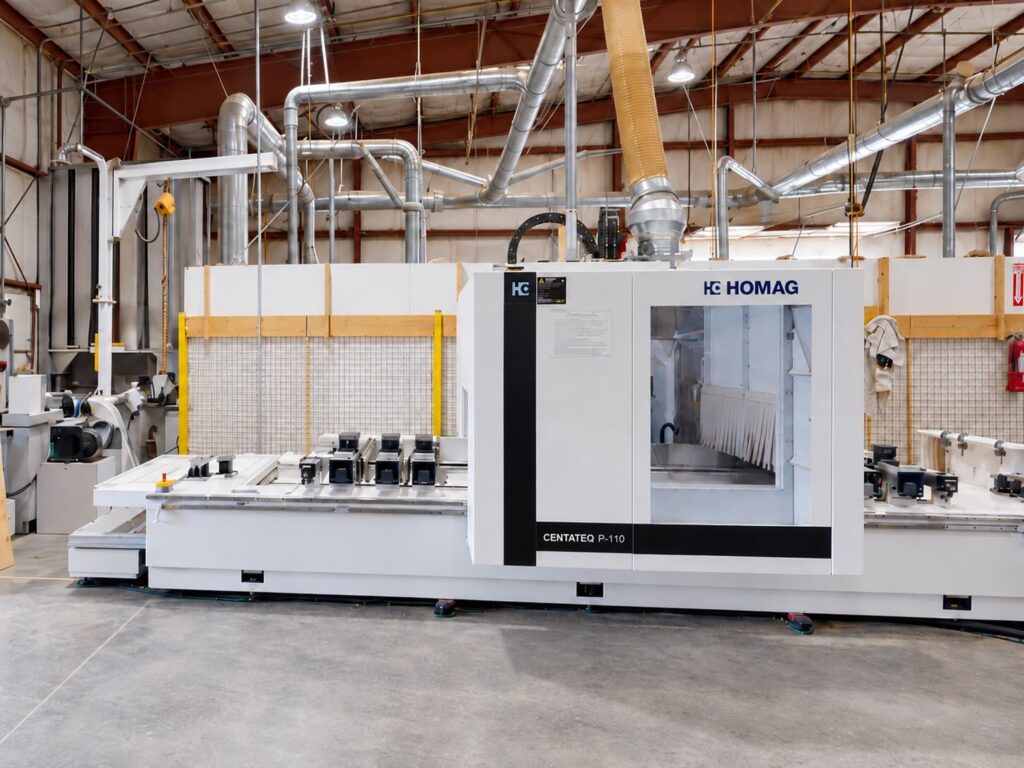
The HOMAG machining center uses programmed machining to produce component features such as drilling and routing. Those operations turn a dimensioned panel into a part prepared for its role in the cabinet.
CabParts’ CNC-based process supports hardware preparation tied to the selected configuration, including separate locations for hinge, drawer-slide and shelf drilling. That helps your team identify the intended mounting points without treating every component as a fresh layout exercise.
For you, the value is repeatability across the job and less manual layout work at assembly—not simply owning a faster machine.
Flexible workholding: support different component sizes
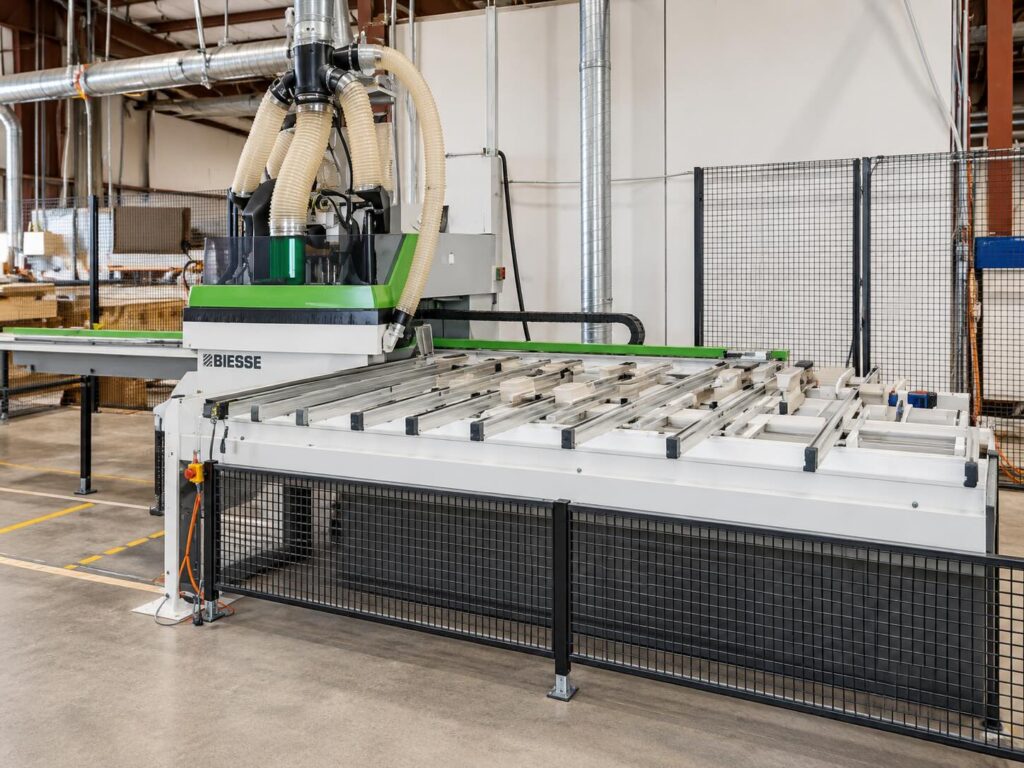
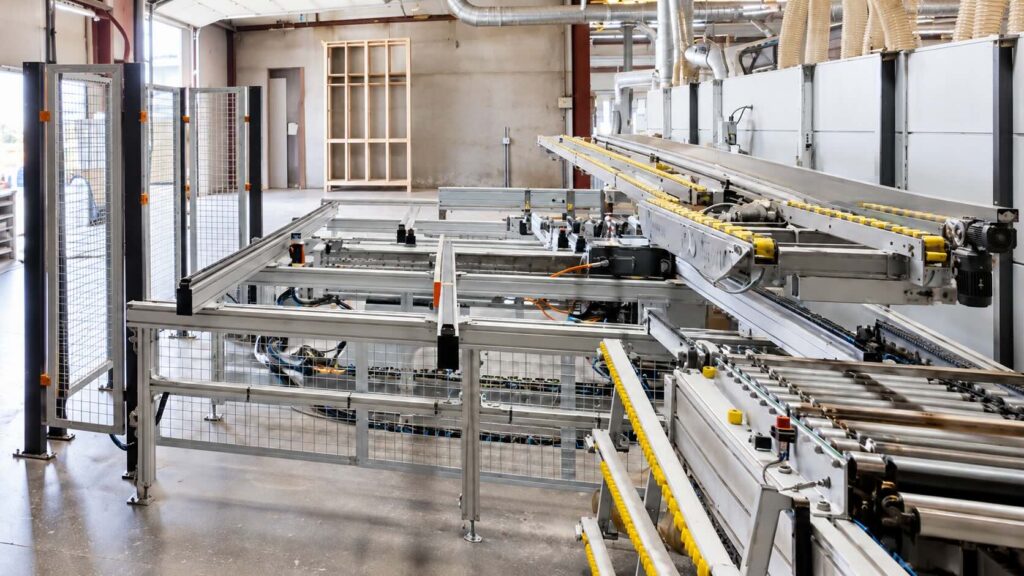
The green-and-white machining center shows another part of custom production: adjustable supports that hold individual components for processing.
A custom project can require a mix of part sizes. Flexible workholding helps accommodate that variety at the machine, so the production method can support the design. Bring us the unusual requirement early so we can confirm how to manufacture it.
Edgebanding: carry the material choice through the edge
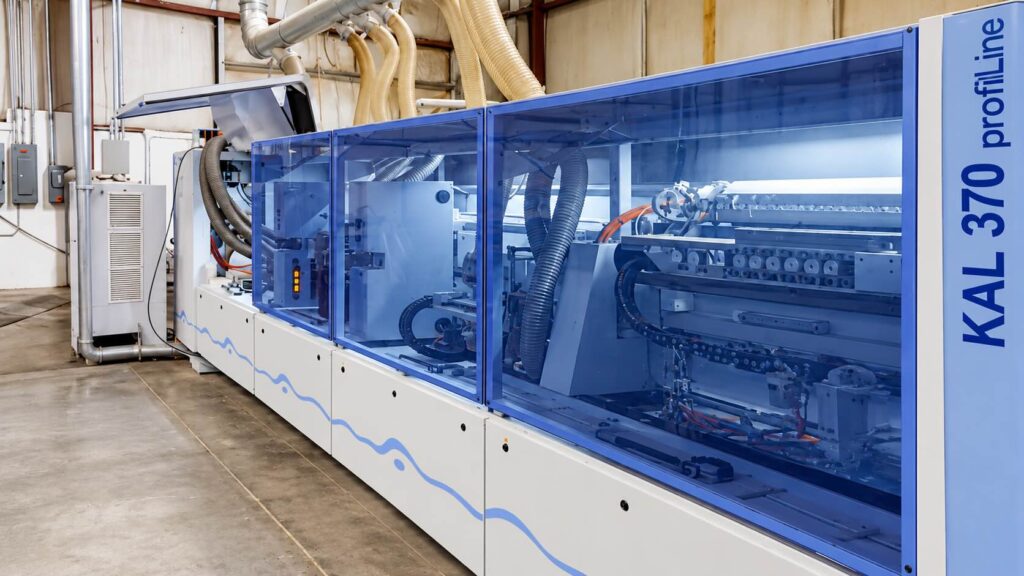
The KAL 370 edgebanding machine applies edging to panel edges. It is the step that connects the panel surface with the edges people see and touch.
Specify which edges should be finished and discuss the available banding for the selected material. For your shop, factory-applied edging can take a separate operation off the bench and give components a coordinated appearance before assembly. Some projects call for raw edges; those details belong in the order too.
A production partner—not another factory to manage
Cutting, machining and edging are individual steps. Your customer needs the result: a cabinet or closet built for the space and the way it will be used.
Using CabParts lets you access those manufacturing processes without adding every machine, setup and maintenance responsibility to your own floor. You keep control of the design and finished work while choosing which components to have made for the project.
Components are identified by order and cabinet item so your team can sort them for assembly. The purpose is straightforward: help move your work from a set of parts toward the finished installation.
Bring the project. We’ll help with the parts.
1. Define what the job needs
Start with the quantities, dimensions, materials, edge treatment and configuration. Flag unusual construction or hardware requirements before placing the order.
2. Confirm the details
Work with CabParts to review the appropriate ordering route and any custom requirements. Confirm the scope, pricing and timing for your project before production.
3. Build the finished result
Use your made-to-order components to support the assembly, finishing and installation work your customer hired you to deliver.
Your case work made easy.
Have a job that calls for something beyond a stock cabinet? Let’s talk through the components and manufacturing requirements.